 Pigeon
 / Paper
PN-84
A note from someone you love, on paper, on your desk.
PN-84 is a palm-sized network printer. People in your flock send it a few lines, end to end encrypted, and a slip rises from the slot and waits. No screen, no app, no notifications. Wi-Fi carries the messages, and a LoRa radio keeps a link when the internet does not.
- Size
- 95 × 97 mm, 92 tall
- Paper
- 57 mm thermal rolls, 48 mm print width
- Power
- USB-C PD charger, 9 V at 2 A or more
- Controller
- ESP32-S3 with a LoRa radio
- Messages
- Encrypted, from your flock only
- Chassis
- Resin with captive nuts, or PLA with heat-set inserts
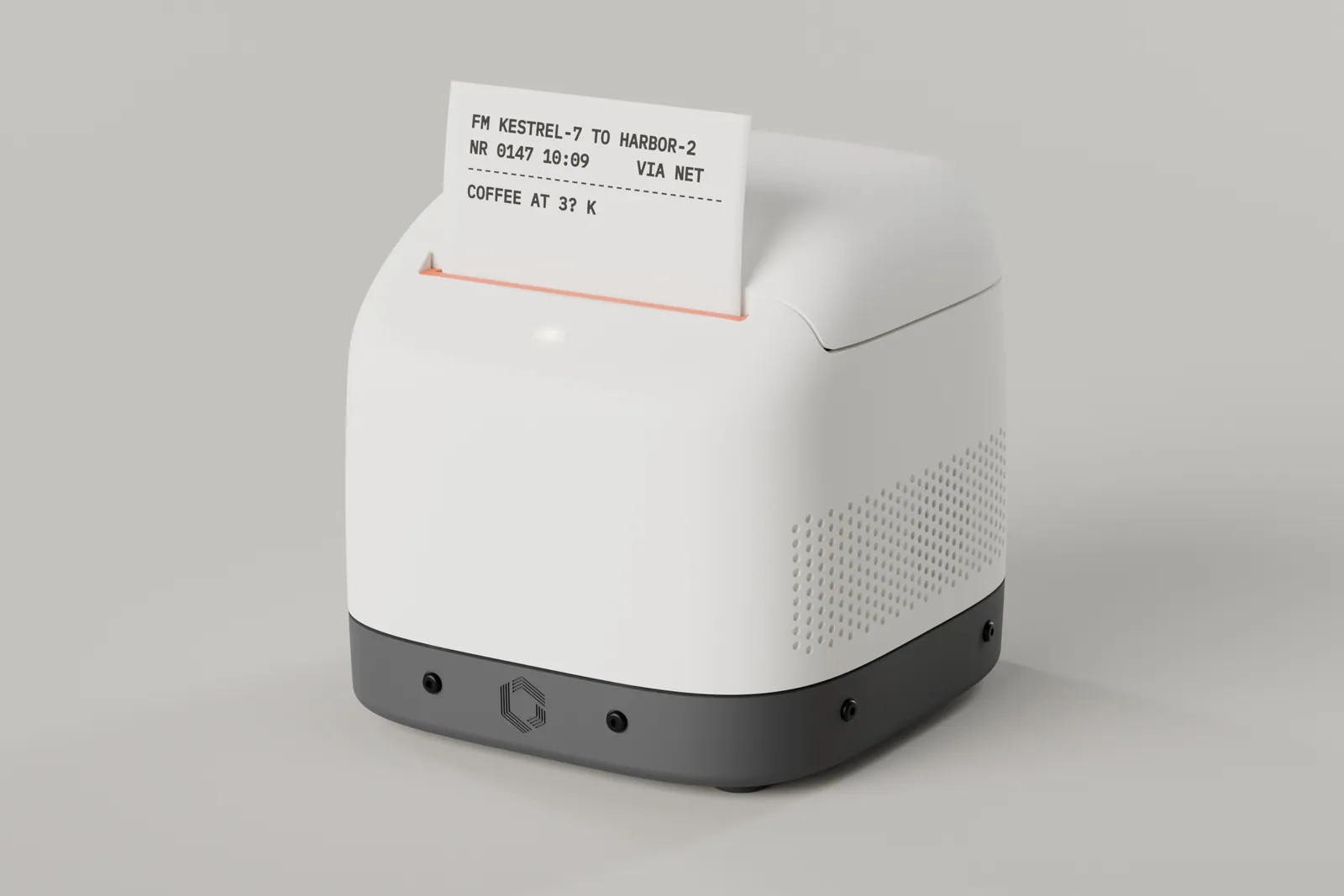
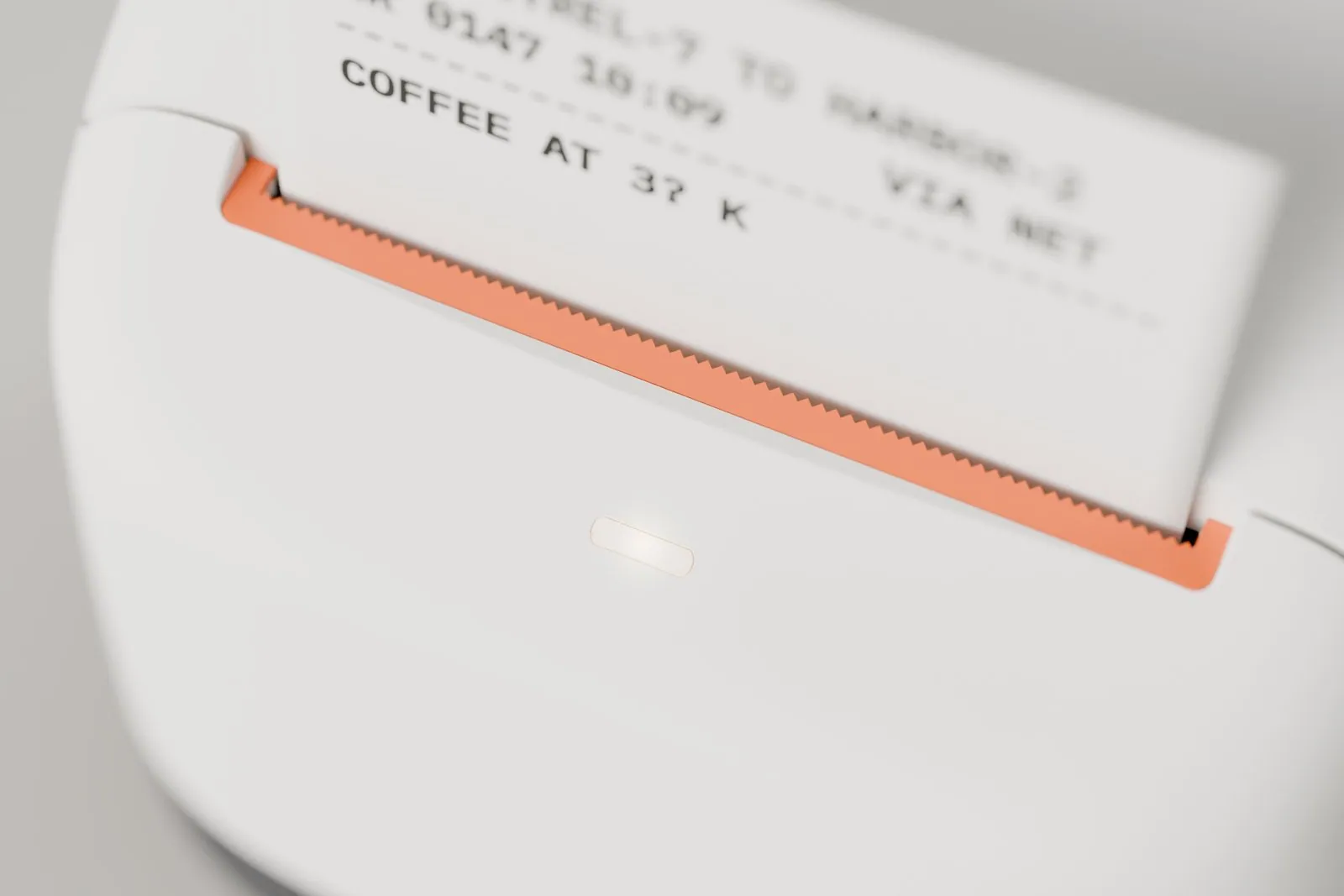
A slip waits for you
There is nothing to answer. Paper rises from the slot and stays there until you walk past. Tear it off on the orange trim.
One light, one sound
A single status light shows idle, message arriving, held and setup. A short sound plays as the slip starts.
Your flock only
Only people you said yes to can print. A message from anyone else is held until you approve them.
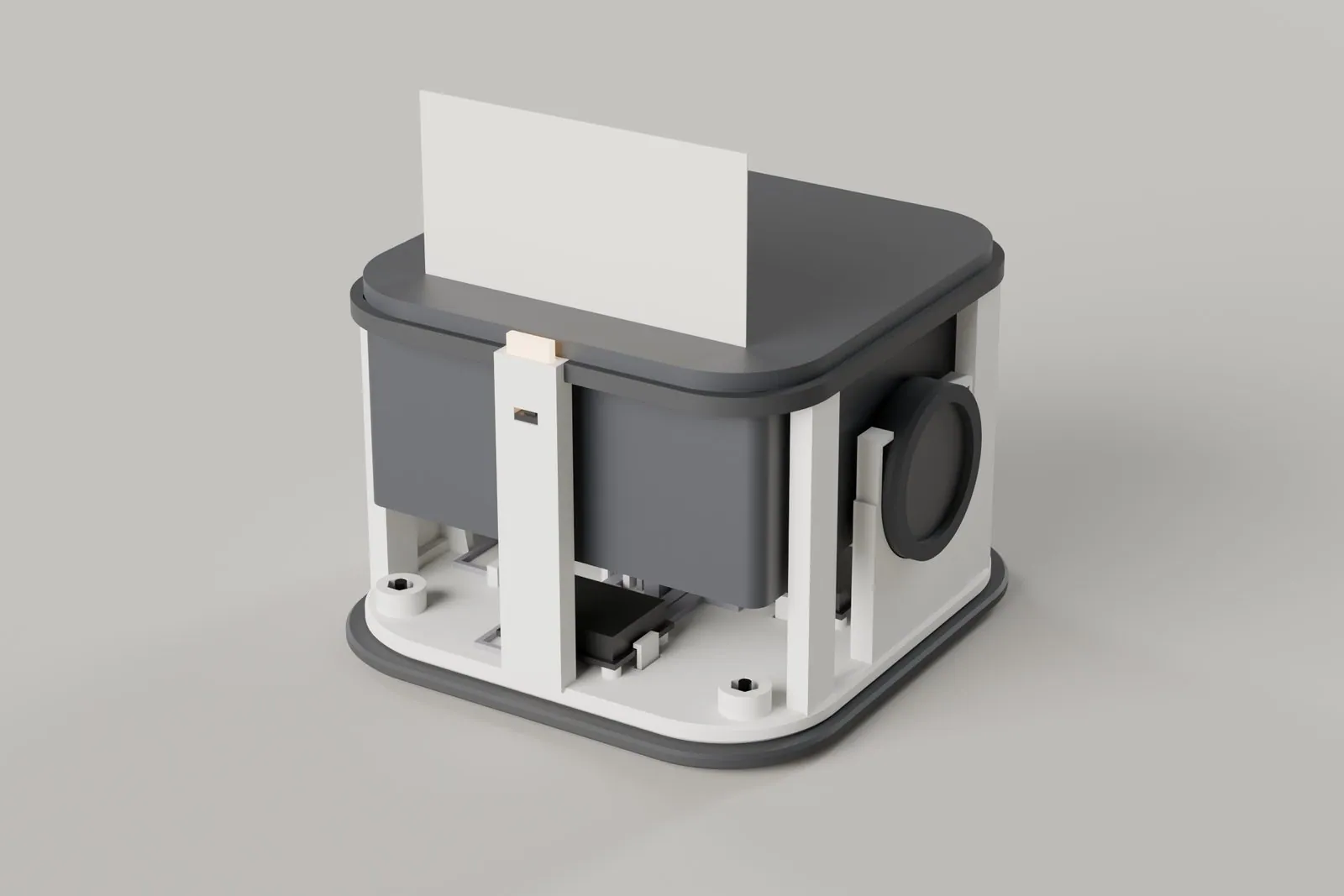
A core and a shell
The printer, boards, speaker and light sit on one printed chassis that runs on a bench base with no shell at all. A shell meets it at a few documented points, so anyone can design a new one.
No app, no account
On first boot it prints a setup slip with a QR code. Scan it with a phone, choose your Wi-Fi and pick a short name.
Private end to end
The relays that carry a message see who it is for, its size and the time, never the sender or the words.
Inside
Bought modules, no custom board
Every part is something you can order today, wired by hand with a short harness.
- PrinterA 58 mm embedded panel thermal printer, 203 dpi, on a serial line
- ControllerSeeed XIAO ESP32S3 with Wi-Fi, Bluetooth and USB-C for flashing
- RadioSeeed Wio-SX1262 LoRa board with its own flat antenna
- PowerA USB-C PD trigger at 9 V for the printer, a buck converter at 5.2 V for the rest
- ProtectionA resettable fuse, a TVS diode and a Schottky diode on the supply
- Sound and lightA small I2S amplifier and speaker, and one LED behind a printed clear light pipe
What you make
Print, buy, build
One product, two ways to print the chassis. Everything else is the same.
You print
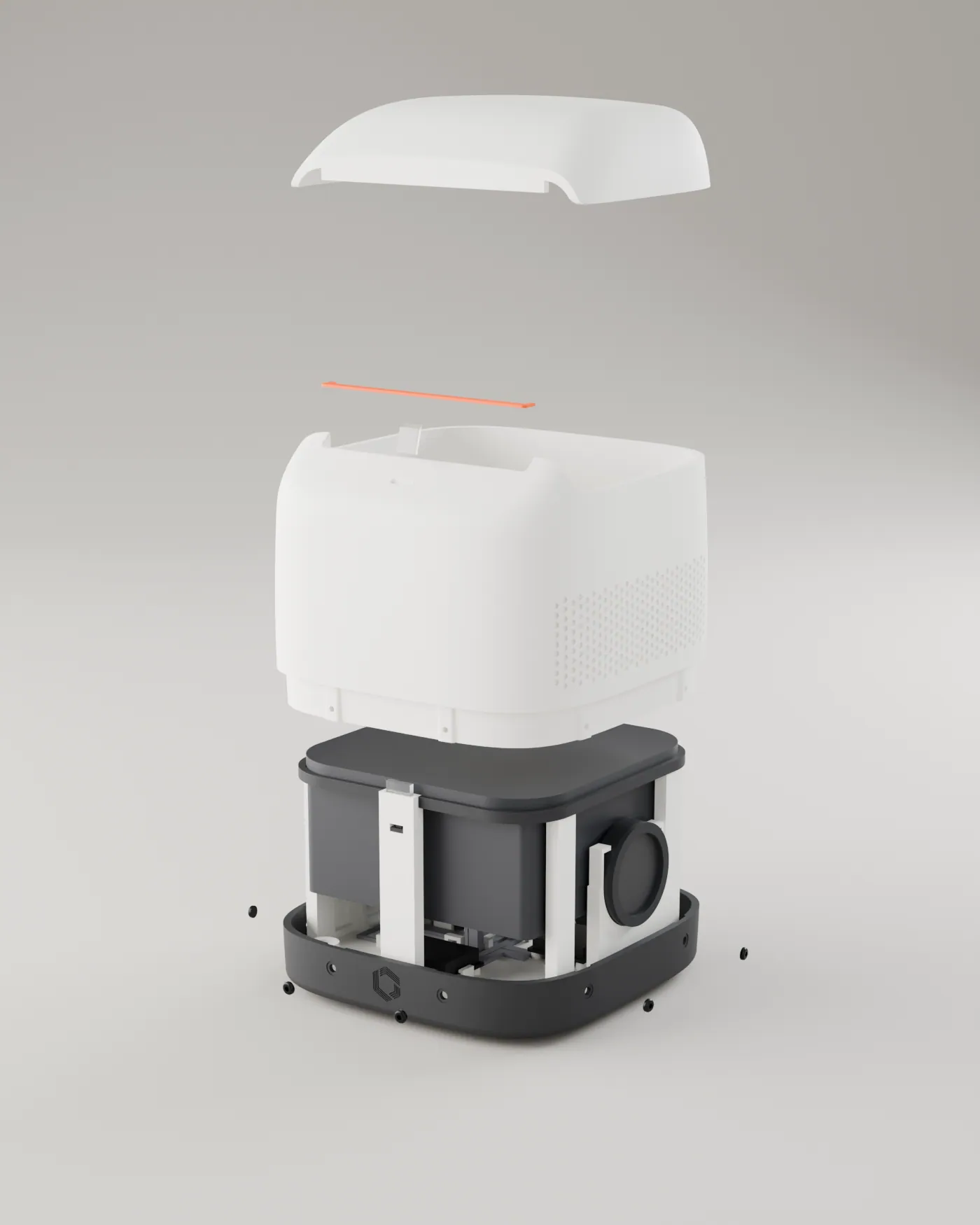
The chassis, the printer adapter ring, the bench base, a clear light pipe and the shell: a band, a body and a lid. Prototype first in Elegoo ABS-Like 3.0 with the fit coupons, then print in tough resin, or print in PLA.
You buy
The printer, the XIAO and LoRa kit, a PD trigger, a buck converter, an amplifier and speaker, an LED, a fuse and a TVS diode, M2 screws with nuts or heat-set inserts, and silicone wire. About A$120 in parts.
You build
Solder a twenty wire harness, flash the firmware, run twelve bring-up checks on the bench, then assemble the core and close it in its shell.
The PN-84 build manual
One illustrated page that follows your choice of resin or PLA chassis: parts with A$ costs, print files and fit coupons, the wiring harness, firmware, bring-up checks, sixteen core assembly steps and nine for the shell. Written before the first units are built, so the sizes of bought parts are nominal until measured.
The rest of the flock
Works with every member
The same identity, the same friends list and the same message format, so a message to you reaches whichever of these you own.