 Pigeon
 / Voice
Shortwave
Hold the button, talk, let go.
Shortwave is a walkie for you and your mates, not your phone. Your mate hears you on their own handset. It has a screen, a channel wheel, an orange talk key and a real antenna. Wi-Fi comes first, and a LoRa radio keeps a link when the internet does not. The casing and core are designed; the firmware is next.
- Size
- 58 × 104 mm, 30 deep, antenna 24 above
- Radio
- LoRa 915 MHz, real SMA antenna
- Screen
- Sharp memory LCD, 303 × 230 pixels
- Controller
- ESP32-S3 with a LoRa radio
- Battery
- 1000 mAh, about a week on standby (estimate)
- Casing
- Resin on an MSLA printer, or PLA on FDM
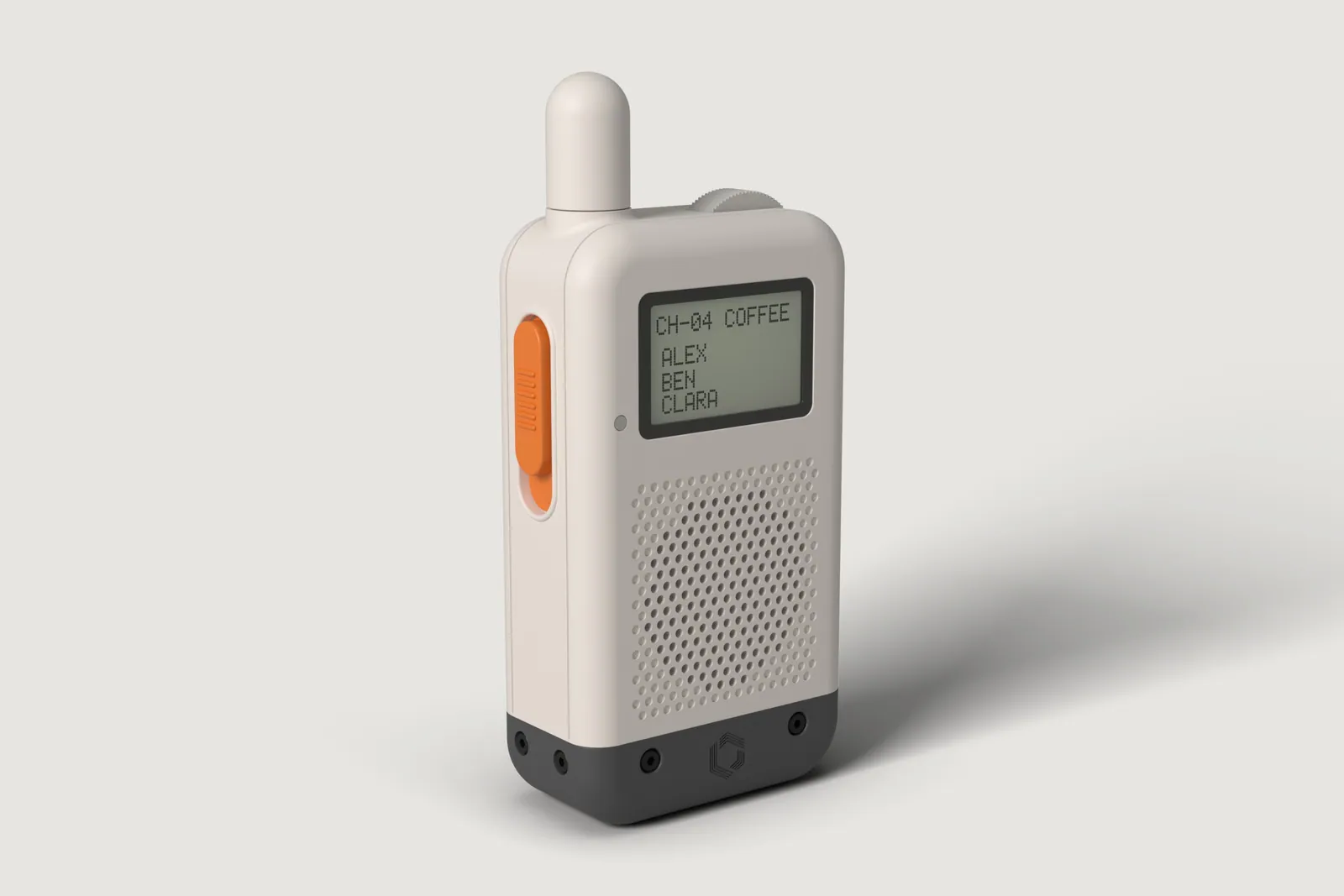
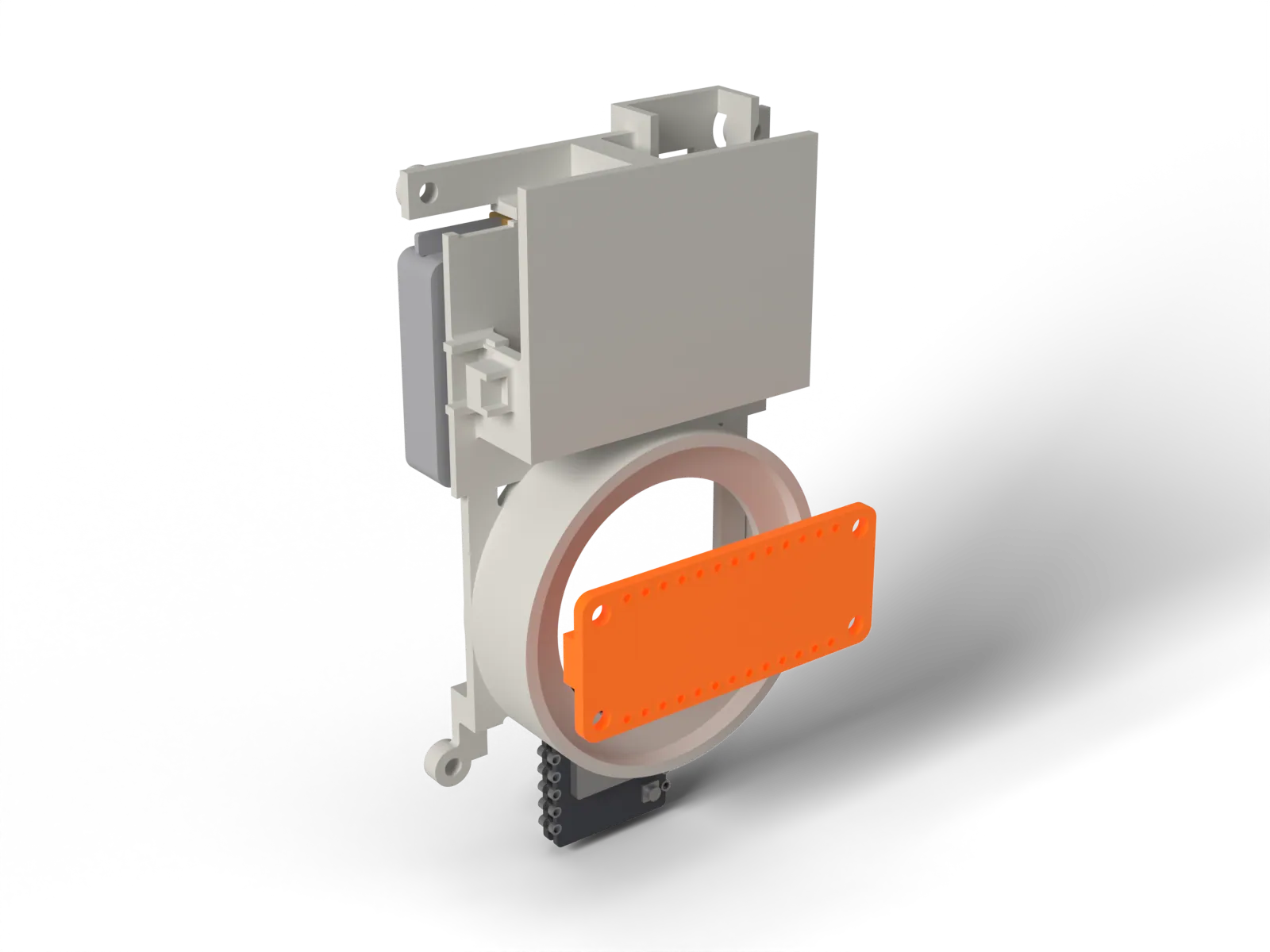
A core and a casing
The core does all the work and stands on its own: controller, radio, screen, speaker, microphone, battery and keys in one printed cradle. The casing meets it at a small documented interface, so anyone can build a different case.
Every step in orange
Each picture in the manual shows the part you are fitting in orange, lifted off its seat in the direction it goes in.
No glue, no inserts
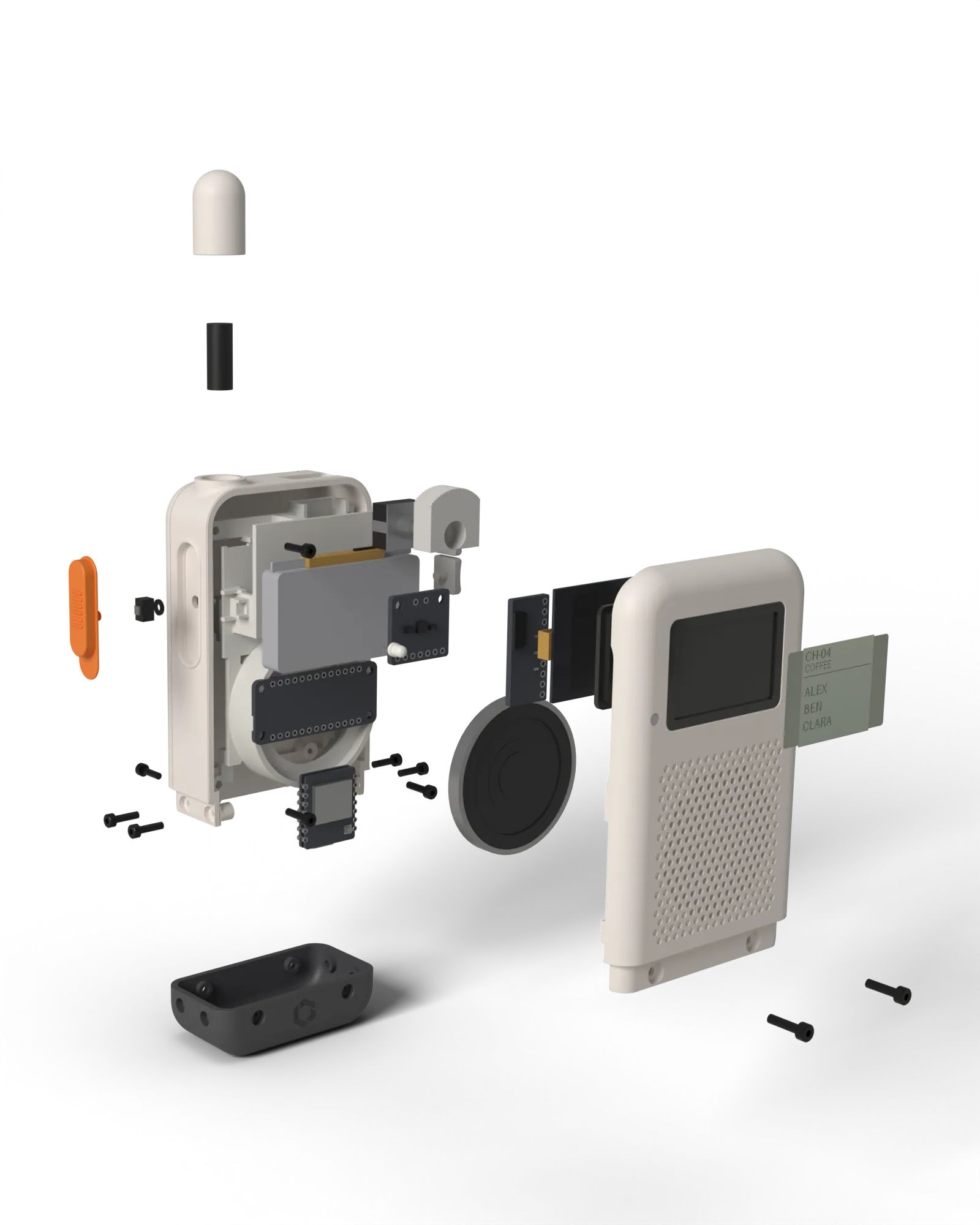
A lid and a tub that snap together, a charcoal band held by eight cap screws, and keys held by small flexible rings.
Inside
Bought modules, one cradle
The same controller and radio as PN-84, so the family shares one core.
- Controller and radioSeeed XIAO ESP32S3 with a Wio-SX1262 LoRa board and an SMA antenna
- ScreenA Sharp memory LCD that runs at 3.3 V with no boost board
- SoundA 40 mm speaker on a small I2S amplifier, and a microphone
- ControlsA talk key, a volume rocker, a channel wheel and a status light, read through an I2C expander
- PowerA 1000 mAh LiPo charged over USB-C on the base
- CasingSixteen printed parts and twelve screws
What you make
Print, buy, build
Two print routes with their own files. Pick one and the manual shows only that one.
You print
The cradle, the lid and tub, the band, the bezel, the keys, the wheel and the antenna boot. Prototype everything first in Elegoo ABS-Like 3.0 with the coupons, then print the finals in tough resin, or print the whole set in PLA with a TPU boot.
You buy
The XIAO and LoRa kit, the memory LCD, a speaker, amplifier and microphone, the expander, a battery, the antenna, switches, an encoder and the screws. About A$140 in parts.
You build
Wire the modules to the cradle, fit the core, close the casing and check the antenna boot fit. The firmware chapter follows when it is written.
The Shortwave build manual
Parts with A$ costs and what to check on arrival, both print routes, wiring, twenty-one assembly steps, the screw map and the antenna boot fit. Nothing has been printed or fitted yet, and the manual says so wherever it matters.
The rest of the flock
Works with every member
The same identity, the same friends list and the same message format, so a message to you reaches whichever of these you own.